I will be speaking at Oberlin College on Thursday, April 29, 2010 4:30-5:30pm
Laura Kina - "Half-Yella: Mixed Race Asian American Art"
Oberlin College & Conservatory
King #106
10 North Professor St.
Oberlin, Ohio 44074
http://new.oberlin.edu/calendar/index.dot?id=1857167
This event is sponsored by Asian American Alliance as a part of Oberlin College's Asian/Pacific American Heritage Month 2010.
Tuesday, April 20, 2010


Tuesday, April 6, 2010
Opening night Laura Kina "A Many-Splendored Thing"
 photo by Emily Wang
Friday, April 2, 2010
Opening night reception for my show
"A Many-Splendored Thing"
Gene Siskel Film Center
164 N. State Street
Chicago, IL 60601
The show runs through May 30, 2010. The show is free and open to the public. The Gene Siskel Film Center is open M-F after 5pm when the box office opens and after 2pm on Sat and Sunday.
For sales, press inquiries, or to arrange a private tour during business hours (M-F 10-5pm) contact the curator Larry Lee at llee2@saic.edu or 773-263-9961
Either Larry or I can also conduct class tours of the exhibition. We have had several School of the Art Institute classes visit the show this past month.
Event photos by Cristian Aybar (age 12), Ariel Aronson (age 15) and Midori Aronson (age 4)


 Hapa Soap Opera (movie poster vs) 2003
 Hapa Soap Opera #3 2003
 Devon Avenue Sampler series 2009
 Hapa Soap Opera #5 and Hapa Soap Opera #4
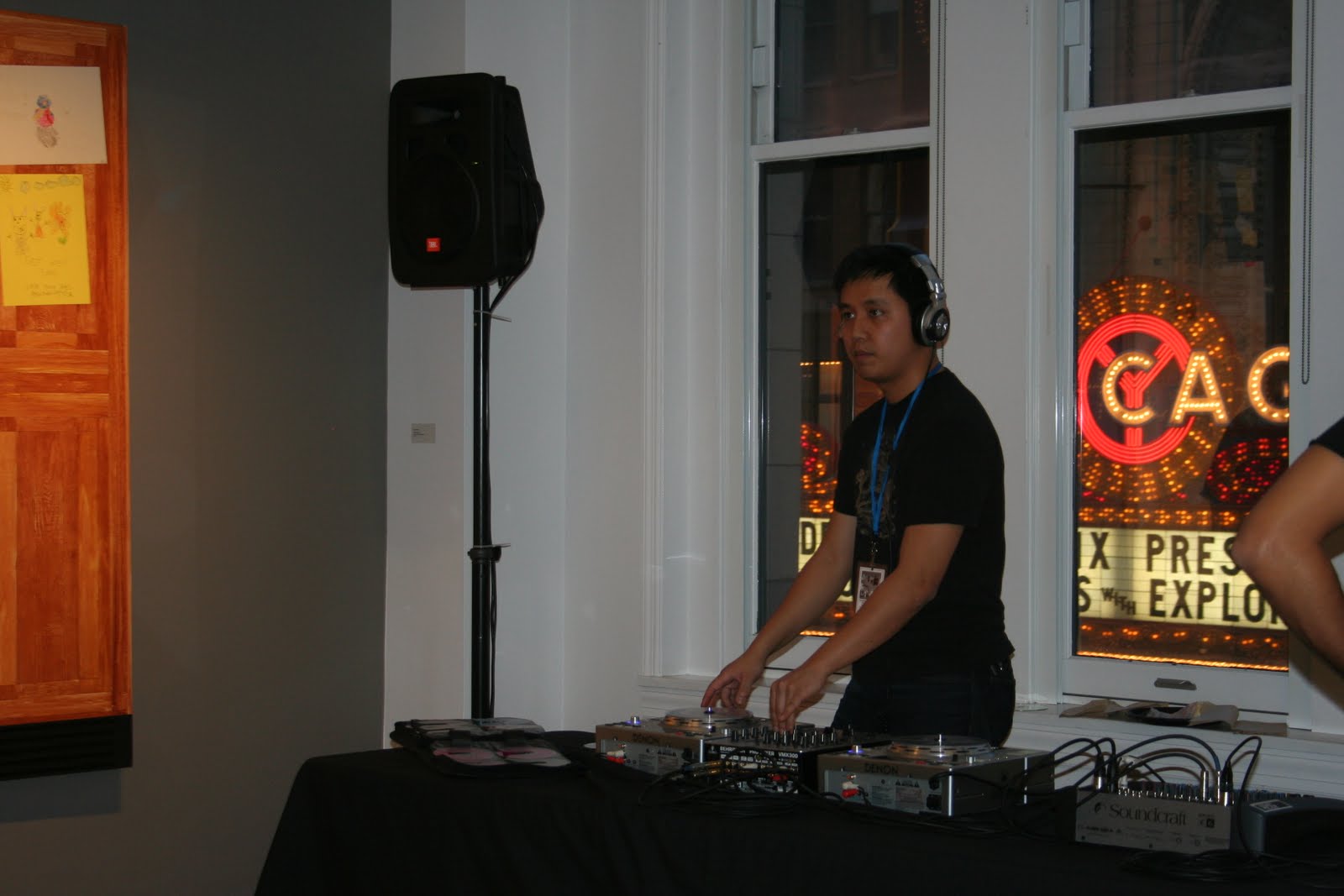 The DJ


 Ariel and me in front of a 1995 piece "Famous Asian Americans in History"
 Evelina and her sister in front of Evelina's portrait


 From left to right: Rice Cooker 1999, Famous Asian Americans in History 1995, Kadosh 1999


 Towards the end of the evening the show was jam packed. The opening night movie sold out (250 seats)!


Sunday, April 4, 2010
Thursday, April 1, 2010
A Many-Splendored Thing opens Friday, April 2, 2010
My show "A Many-Splendored Thing" opens Friday, April 2, 2010 at the Gene Siskel Film Center 164 N. State Street Chicago, IL
The show will run through May 30, 2010.
Laura Kina "A Many-Splendored Thing" was curated by Larry Lee in conjunction with the 15th annual Foundation for Asian American Independent Media's Asian American Showcase.
For more info and to read Larry's essay visit:
http://www.faaim.org/visual/

Special thanks to Tim Hugh, the festival director, and graphic designer Anna Kong for making the event poster, and the fabulous Mr. Lee himself!
Larry Lee ended up picking out 44 works for the show including: selections from my recent 2009 Devon Avenue Sampler series; the 2007/2008 Aloha Dreams series; the 2006 Loving series; 2003-2005 Hapa Soap Opera series; and a few of my UIC grad school thesis works from my 2001 Refrigerator series, which were featured in the Spertus exhibition The New Authentics: Artists of the Post-Jewish Generation.
Larry also went through the archives and pulled out really early works starting from 1994, some which have never been shown before and some which we shipped back from private collections. These include: Tea Party, Spam Sushi, Rice Cooker, and Kadosh. Rice Cooker is a 1999 semi-abstract work with anime eyes which I painted and then promptly hid away (still not sure if it's any good but Larry likes it).
My 1994 Tea Party painting is especially sentimental to me as it features my late little sister, Alison Diane Kina, and me playing tea party. Alison had Down's Syndrome and passed away when she was 12. We were 3 years apart and shared a bedroom so we were very close. This was the only painting that I did as an undergraduate at the School of the Art Institute of Chicago that my late professor Ray Yoshida (1930-2009) liked. I idolized him and was always looking for his approval. This was probably due to the fact that he was an older guy from Hawai'i and he reminded me of my dad. Plus he was the reason I moved across the country from Seattle to Chicago to go to SAIC. I had seen his work and knew he was the person I wanted to study under. Ditto for the reason I chose to go to UIC. I saw a painting by Kerry James Marshall at the MCA and I decided then and there that he was the person who I wanted to study under. At any rate, Ray like Tea Party probably because it was heavily influenced by his own work. My parents own this piece and it's been hanging in their dining room in Poulsbo, WA for the past 15 years.
I had been meaning to track Ray down and thank him for being such a great teacher. In 2008 I got his address in Hawai'i from his friend and fellow Chicago Imagist artist Karl Wirsum. The address sat in my "To Do" box and in 2009, when he passed away, obviously it was too late to say thank you. At the same time I had been meaning to shoot an oral history video with an old timer from Camp 5 sugar cane plantation in Piihonua, Joji Shiro, who also passed away before we could shoot the interview. The lesson I took away from this was to say "thank you" faster AND I was propelled to start an Asian American Art Oral History project at DePaul with my students. Two classes of students in my Asian American Art and Culture course have completed over 20 interviews to date with Mid-west based artists such as Tatsu Aoki, Michiko Itatani, Saira Wasim, Indira Freitas Johnson and many others. It's really cool. The archives are housed at DePaul's Richardson Library and are available to the public for research. Contact Kathryn DeGraff at 773-325-2167 kdegraff@depaul.edu for more information. I hope to have them available online in the near future.
The funniest work of all is a 1995 series of 20 drawings called (and quite earnestly) Famous Asian Americans in History. The series includes quick sketches of people like Connie Chung and the late Challenger astronaut Ellison Onizuka and classics like Frank Chin and Maxine Hong Kingston (placed next to each other, of course). The works were created for a collaborate video project, under the same title, with Larry Lee and Carlton Mok (aka Mo) for the now defunct DestinAsian as part of a an educational program for Walt Disney Magnet school kids back in 1995.
I hope you can join us in celebrating 15 years of the Asian American Showcase. It's quite an honor to have my work showcased this year. A big Thank You to everyone who helped make this show and this work happen.
The show will run through May 30, 2010.
Laura Kina "A Many-Splendored Thing" was curated by Larry Lee in conjunction with the 15th annual Foundation for Asian American Independent Media's Asian American Showcase.
For more info and to read Larry's essay visit:
http://www.faaim.org/visual/

Special thanks to Tim Hugh, the festival director, and graphic designer Anna Kong for making the event poster, and the fabulous Mr. Lee himself!
Larry Lee ended up picking out 44 works for the show including: selections from my recent 2009 Devon Avenue Sampler series; the 2007/2008 Aloha Dreams series; the 2006 Loving series; 2003-2005 Hapa Soap Opera series; and a few of my UIC grad school thesis works from my 2001 Refrigerator series, which were featured in the Spertus exhibition The New Authentics: Artists of the Post-Jewish Generation.
Larry also went through the archives and pulled out really early works starting from 1994, some which have never been shown before and some which we shipped back from private collections. These include: Tea Party, Spam Sushi, Rice Cooker, and Kadosh. Rice Cooker is a 1999 semi-abstract work with anime eyes which I painted and then promptly hid away (still not sure if it's any good but Larry likes it).
My 1994 Tea Party painting is especially sentimental to me as it features my late little sister, Alison Diane Kina, and me playing tea party. Alison had Down's Syndrome and passed away when she was 12. We were 3 years apart and shared a bedroom so we were very close. This was the only painting that I did as an undergraduate at the School of the Art Institute of Chicago that my late professor Ray Yoshida (1930-2009) liked. I idolized him and was always looking for his approval. This was probably due to the fact that he was an older guy from Hawai'i and he reminded me of my dad. Plus he was the reason I moved across the country from Seattle to Chicago to go to SAIC. I had seen his work and knew he was the person I wanted to study under. Ditto for the reason I chose to go to UIC. I saw a painting by Kerry James Marshall at the MCA and I decided then and there that he was the person who I wanted to study under. At any rate, Ray like Tea Party probably because it was heavily influenced by his own work. My parents own this piece and it's been hanging in their dining room in Poulsbo, WA for the past 15 years.
I had been meaning to track Ray down and thank him for being such a great teacher. In 2008 I got his address in Hawai'i from his friend and fellow Chicago Imagist artist Karl Wirsum. The address sat in my "To Do" box and in 2009, when he passed away, obviously it was too late to say thank you. At the same time I had been meaning to shoot an oral history video with an old timer from Camp 5 sugar cane plantation in Piihonua, Joji Shiro, who also passed away before we could shoot the interview. The lesson I took away from this was to say "thank you" faster AND I was propelled to start an Asian American Art Oral History project at DePaul with my students. Two classes of students in my Asian American Art and Culture course have completed over 20 interviews to date with Mid-west based artists such as Tatsu Aoki, Michiko Itatani, Saira Wasim, Indira Freitas Johnson and many others. It's really cool. The archives are housed at DePaul's Richardson Library and are available to the public for research. Contact Kathryn DeGraff at 773-325-2167 kdegraff@depaul.edu for more information. I hope to have them available online in the near future.
The funniest work of all is a 1995 series of 20 drawings called (and quite earnestly) Famous Asian Americans in History. The series includes quick sketches of people like Connie Chung and the late Challenger astronaut Ellison Onizuka and classics like Frank Chin and Maxine Hong Kingston (placed next to each other, of course). The works were created for a collaborate video project, under the same title, with Larry Lee and Carlton Mok (aka Mo) for the now defunct DestinAsian as part of a an educational program for Walt Disney Magnet school kids back in 1995.
I hope you can join us in celebrating 15 years of the Asian American Showcase. It's quite an honor to have my work showcased this year. A big Thank You to everyone who helped make this show and this work happen.
Sunday, March 21, 2010
FAAIM- celebrating 15 years of Asian American film, art, literature and music
FAAIM is celebrating 15 years of presenting and supporting Asian American film, art, literature and music in Chicago. Back in 1995, journalist Ben Kim and musicians Sooyoung Park and William Shin started the annual showcase. My friend Larry Lee and I had been part of a pan-Asian American arts and culture organization called DestinAsian (1992-1995) that faded away when the well of arts funding dried up in Chicago. When the FAAIM showcase started, Ben Kim leaned on Larry and me to ensure that the visual arts were part of the annual festivities. I remember co-curating one of the first shows in conjunction with the showcase called Yellow Face with Elaine Ng, who is now the Editor-In-Chief of Art Asia Pacific Magazine! FAAIM's not the only Asian American arts organization in town but it's been consistent part of my life for the past 15 years and many of us have been involved with other Asian/Asian American arts organizations in the city, nationally and internationally and the intersections of all these groups has helped create a rich history here in Chicago that has yet to be fully told.
DestinAsian had been forged in the wake of the renewed political activism that followed Sa-i-gu (1992 LA Riots), the ongoing sense of injustice over the Vincent Chin murder (1982 Detroit), and in the footsteps of the larger NY and SF Asian American Arts organizations (Basement Workshop, Godzilla, Kearney Street Workshop). By the time FAAIM came on the scene, the hey-day of multiculturalism from the 80s and 90s was beginning to wane. It wasn't enough to simply organize exhibitions showcasing Asian American art (read Alice Yang's 1998 essay "Asian American Exhibitions Reconsidered" in Why Asia? for a detailed debate on these issues). Gone too were those punk anti-slick political protest aesthetics of the 60s and 70s (see "Is there an Asian American Aesthetics?" Ed. Augie Tam and Gargi Chatterjee 2007). Increasingly we were breaking through to the mainstream. Remember all the APIA success stories heralded by A Magazine and the hype around Justin Lin's 2002 Better Luck Tomorrow? Art school and film school were a given. I remember filmmaker and musician Romeo Candido at one of our "TalkBack" sessions schooling us on the importance of being "on point" with our work. Foregrounding issues of race was not enough. Perfecting our craft was expected and our curatorial premises had to be critical (at least in theory....goofiness seemed to rule the day many times).
This wasn't the old community arts movement anymore. There were pros and cons to this shift. I didn't find myself surrounded as much by multiple generations. In the early years you really would find senior citizens and college kids working together on art shows. Now the movement was decidedly young. Enter the APIA arts generation of Giant Robot. The other shift we began to see was the increase in transnationlism and emphasis on diaspora in the arts. Now we were hip and global cosmopolitans connected 24/7 via Starbucks coffee, blogs, and listservs (this was before Facebook and Twitter et al)!
Then enter 9/11 and the Asian American Artists Collective Chicago (2001-2005) [along with Mango Tribe, YAWP! Project A and Kitchen Poems]. The time had come for us to speak up. It was important for us to stand in solidarity with our fellow Muslim brothers and sisters and Anida Yoeu Ali and Marlon Esguerra of I was Born with Two Tongues led the way. We wanted to warn America not to make the same mistake as we did in WWII with the internment of Japanese Americans. The face of who was involved with Asian American arts had begun to shift. The children of the post-1965 wave of immigrants from all over Asia had come of age. Chinese, Japanese, and Filipino Americans have long been central to Chicago's Asian American arts community but now they were joined by Koreans, Cambodians, Vietnamese, Loations, Hmong, and growing number of transracial Korean Adoptees, mixed race Asians like me and South Asians from India, Pakistan and Bangladesh.
Naturally there were tensions and fault lines in these groups. Usually this had less to do with ethno-racial issues (although equity and parity and gender equality needed to be addressed) and more to do with affiliations by discipline (film, art, music, spoken word, literature, performance etc.) and the extent to which artists wanted or needed to be involved in directly political content or to be defined under the umbrella of "Asian America." I think it's important to note both the limitations and the benefits of pan-Asian American interdisciplinary arts organizing. It is still important for ethnic specific arts organizations such as Pintig and Desilit the Chicago Filipino American Film Festival to exist to build and reflect specific communities and to foreground thier histories, stories and issues. It has also been useful for Asians in American to work across ethnic lines in groups devoted to specific disciplines (comedy, theatre, music...) such as: Stir Friday Night, Silk Road Theatre Project, A Squared Theatre Workshop, the Asian Improv aRts Midwest Asian American Jazz Festival.
Depending on how you look at things, Chicago's Asian American art scene has been blessed and burdened by it's unique characteristics. Too little funding and institutionalization has instilled an underground DIY culture of volunteerism (and burn out and maxing of your personal credit cards for the sake of art). Colleges such as the School of the Art Institute of Chicago bring a constant flow of new artists from around the world, Korea in particular, who come to this city to make their mark in the arts. As a center for education, it also means that many of these same artists just pass through Chicago on their way to careers in NY or LA or back in Korea, Japan, or China etc. This helps extend our networks but it also means that some of the best don't stay. We suffer from "Second City" syndrome. Where are the funders and collectors? This all makes us tough and a little skeptical of the marketplace. We are perfectly at home curating a show in a gritty alternative space as well as a polished gallery. We can be the directors and have no qualms about making lunch for the crew. We'll be on stage and run the AV and PR and check your coat!
But surely it's better on the coasts? Because we don't have the shear numbers of ethnic specific populations that you see on the coasts, we are more apt to reach across ethnic lines to work together on pan-Asian projects and to also find deep and meaningful affiliations with other communities of color. Chicago's strengths in theater, jazz, indie rock and spoken word have dominated the scene. All of these factors have helped create our unique arts community.
On March 20, 2010 the Foundation for Asian American Independent Media (FAAIM) held their first ever fundraiser for the Asian American Showcase. It's taken a while to ask for the $! Special thanks to Tim Hugh for directing the showcase for the past 10-years!
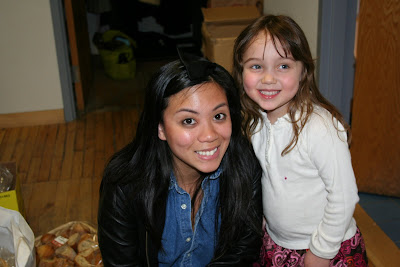
Here are some snapshots from the event held at Andrew Bae Gallery 300 W. Superior Chicago, IL http://www.andrewbaegallery.com/
http://www.faaim.org/fundraiser/



DestinAsian had been forged in the wake of the renewed political activism that followed Sa-i-gu (1992 LA Riots), the ongoing sense of injustice over the Vincent Chin murder (1982 Detroit), and in the footsteps of the larger NY and SF Asian American Arts organizations (Basement Workshop, Godzilla, Kearney Street Workshop). By the time FAAIM came on the scene, the hey-day of multiculturalism from the 80s and 90s was beginning to wane. It wasn't enough to simply organize exhibitions showcasing Asian American art (read Alice Yang's 1998 essay "Asian American Exhibitions Reconsidered" in Why Asia? for a detailed debate on these issues). Gone too were those punk anti-slick political protest aesthetics of the 60s and 70s (see "Is there an Asian American Aesthetics?" Ed. Augie Tam and Gargi Chatterjee 2007). Increasingly we were breaking through to the mainstream. Remember all the APIA success stories heralded by A Magazine and the hype around Justin Lin's 2002 Better Luck Tomorrow? Art school and film school were a given. I remember filmmaker and musician Romeo Candido at one of our "TalkBack" sessions schooling us on the importance of being "on point" with our work. Foregrounding issues of race was not enough. Perfecting our craft was expected and our curatorial premises had to be critical (at least in theory....goofiness seemed to rule the day many times).
This wasn't the old community arts movement anymore. There were pros and cons to this shift. I didn't find myself surrounded as much by multiple generations. In the early years you really would find senior citizens and college kids working together on art shows. Now the movement was decidedly young. Enter the APIA arts generation of Giant Robot. The other shift we began to see was the increase in transnationlism and emphasis on diaspora in the arts. Now we were hip and global cosmopolitans connected 24/7 via Starbucks coffee, blogs, and listservs (this was before Facebook and Twitter et al)!
Then enter 9/11 and the Asian American Artists Collective Chicago (2001-2005) [along with Mango Tribe, YAWP! Project A and Kitchen Poems]. The time had come for us to speak up. It was important for us to stand in solidarity with our fellow Muslim brothers and sisters and Anida Yoeu Ali and Marlon Esguerra of I was Born with Two Tongues led the way. We wanted to warn America not to make the same mistake as we did in WWII with the internment of Japanese Americans. The face of who was involved with Asian American arts had begun to shift. The children of the post-1965 wave of immigrants from all over Asia had come of age. Chinese, Japanese, and Filipino Americans have long been central to Chicago's Asian American arts community but now they were joined by Koreans, Cambodians, Vietnamese, Loations, Hmong, and growing number of transracial Korean Adoptees, mixed race Asians like me and South Asians from India, Pakistan and Bangladesh.
Naturally there were tensions and fault lines in these groups. Usually this had less to do with ethno-racial issues (although equity and parity and gender equality needed to be addressed) and more to do with affiliations by discipline (film, art, music, spoken word, literature, performance etc.) and the extent to which artists wanted or needed to be involved in directly political content or to be defined under the umbrella of "Asian America." I think it's important to note both the limitations and the benefits of pan-Asian American interdisciplinary arts organizing. It is still important for ethnic specific arts organizations such as Pintig and Desilit the Chicago Filipino American Film Festival to exist to build and reflect specific communities and to foreground thier histories, stories and issues. It has also been useful for Asians in American to work across ethnic lines in groups devoted to specific disciplines (comedy, theatre, music...) such as: Stir Friday Night, Silk Road Theatre Project, A Squared Theatre Workshop, the Asian Improv aRts Midwest Asian American Jazz Festival.
Depending on how you look at things, Chicago's Asian American art scene has been blessed and burdened by it's unique characteristics. Too little funding and institutionalization has instilled an underground DIY culture of volunteerism (and burn out and maxing of your personal credit cards for the sake of art). Colleges such as the School of the Art Institute of Chicago bring a constant flow of new artists from around the world, Korea in particular, who come to this city to make their mark in the arts. As a center for education, it also means that many of these same artists just pass through Chicago on their way to careers in NY or LA or back in Korea, Japan, or China etc. This helps extend our networks but it also means that some of the best don't stay. We suffer from "Second City" syndrome. Where are the funders and collectors? This all makes us tough and a little skeptical of the marketplace. We are perfectly at home curating a show in a gritty alternative space as well as a polished gallery. We can be the directors and have no qualms about making lunch for the crew. We'll be on stage and run the AV and PR and check your coat!
But surely it's better on the coasts? Because we don't have the shear numbers of ethnic specific populations that you see on the coasts, we are more apt to reach across ethnic lines to work together on pan-Asian projects and to also find deep and meaningful affiliations with other communities of color. Chicago's strengths in theater, jazz, indie rock and spoken word have dominated the scene. All of these factors have helped create our unique arts community.
On March 20, 2010 the Foundation for Asian American Independent Media (FAAIM) held their first ever fundraiser for the Asian American Showcase. It's taken a while to ask for the $! Special thanks to Tim Hugh for directing the showcase for the past 10-years!
Here are some snapshots from the event held at Andrew Bae Gallery 300 W. Superior Chicago, IL http://www.andrewbaegallery.com/
http://www.faaim.org/fundraiser/


Subscribe to:
Posts (Atom)